What You're Actually Paying For Above $3,000
Every model here uses an RTX 5080 or RTX 5090, but maximum GPU power ranges by exact configuration and mode. TGP is only one input: CPU, firmware, cooling, memory, display, build quality, and serviceability also matter.
The ASUS SCAR line uses liquid metal compound on both CPU and GPU dies, while Razer uses a rigid CNC aluminum monocoque and MSI's Titan adds a genuine mechanical keyboard. Cooling design, materials, display quality and serviceability are the meaningful differentiators at this price.
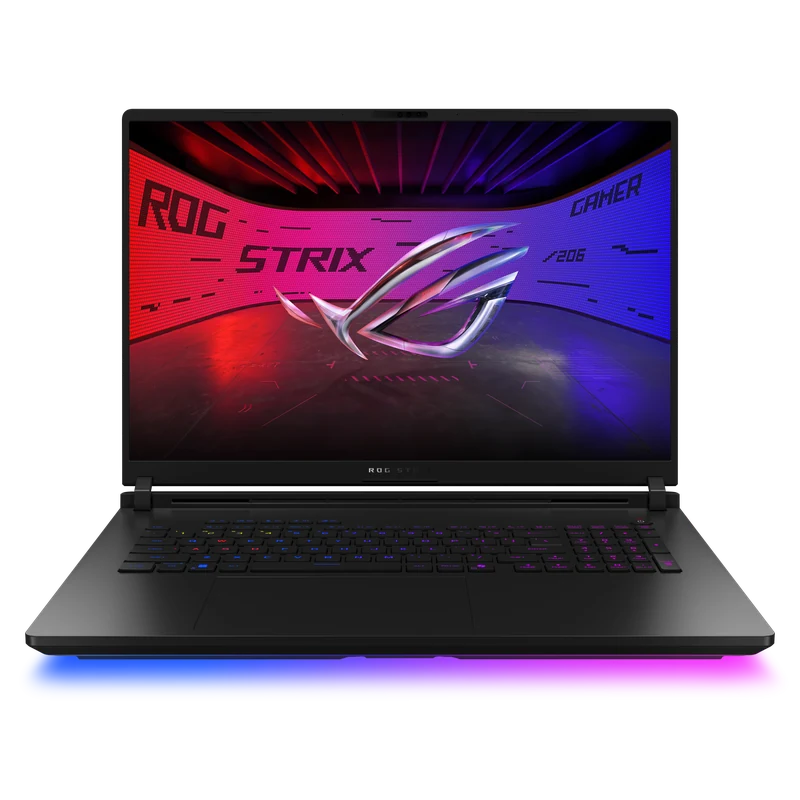
ASUS ROG Strix SCAR 18 — Evidence-Backed RTX 5090 Option
The SCAR 18 combines a 175W RTX 5090, end-to-end vapor chamber, liquid metal compound, and an 18-inch MiniLED 240Hz display. Its linked exact-configuration dataset supports workload-specific comparisons, but it is not collapsed with other sources into a universal performance lead.
At 3.3kg with a 90Wh battery, it is a desktop-replacement design. Display brightness, acoustics, thermals, and runtime should be read from the linked review with their source conditions intact.
- Top-tier sustained gaming performance
- Liquid metal cooling on CPU and GPU
- 2,048-zone MiniLED 240Hz specification
- RTX 5090 at full 175W — no compromise
- Tool-less RAM and SSD access
- 3.3kg — desk machine only
- 90Wh capacity does not make it travel-friendly
- Loud fans at full load
- 400W power brick is large
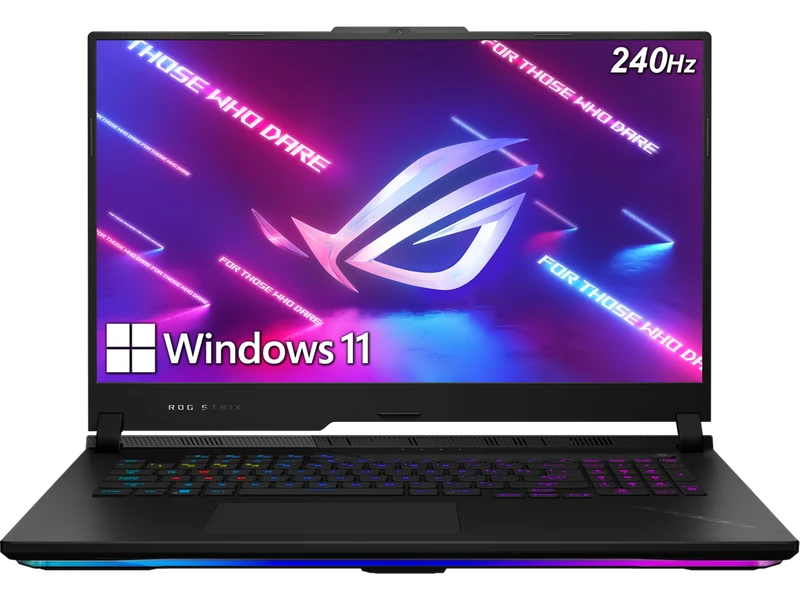
ASUS ROG Strix SCAR 16 — Evidence-Backed RTX 5080 Option
The SCAR 16 packages a 175W RTX 5080, liquid metal cooling, and a 1,024-zone MiniLED 240Hz display in a 2.8kg chassis. Its linked dataset should be compared with the SCAR 18 only where game, resolution, preset, rendering mode, and power profile match.
It retains upgradeable memory and storage while reducing chassis size. Whether it is the better value depends on the live offers and the buyer's GPU-tier requirements, not a fixed price or universal performance gap.
- Same liquid metal cooling as SCAR 18
- RTX 5080 at 175W — top of its class
- 1,024-zone MiniLED with strong HDR capability
- Smaller and lighter than SCAR 18
- Upgradeable RAM and storage
- Still 2.8kg — not a casual carry
- 90Wh battery in a high-power chassis
- RTX 5080 shows its limits at native 4K
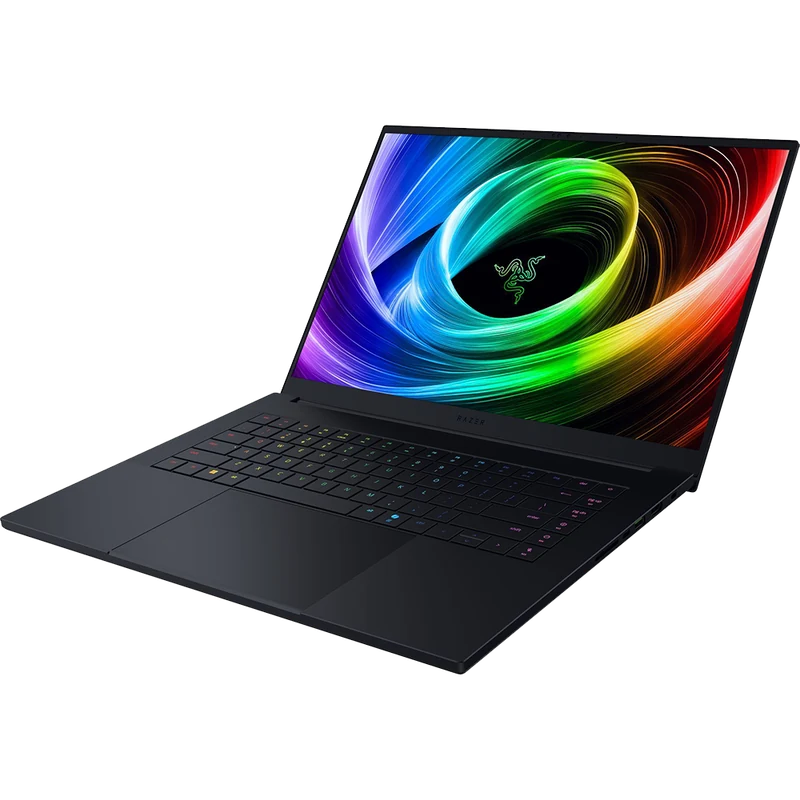
Razer Blade 16 EN9 — Portable RTX 5090 Alternative (Unranked)
The exact RZ09-05819EN9-R3U1 combines an RTX 5090 at up to 165W, Core Ultra 9 386H, 64GB LPDDR5X-9600, 2TB storage, a 240Hz OLED display, and a 2.14kg CNC chassis.
It remains unranked because the independent dataset comes from a related 32GB RZ09-0581-family review unit rather than the exact 64GB EN9 retail configuration. Compare its live price and family-level evidence without assigning a numeric performance gap to the SCAR models.
- RTX 5090 with 24GB VRAM in a 2.14kg chassis
- CNC aluminium construction
- 2560×1600 OLED 240Hz display
- 64GB LPDDR5X-9600 and 2TB storage
- Exact 64GB-SKU controlled evidence is incomplete
- RAM soldered — no upgrade path
- Razer warranty support historically inconsistent
- Value depends on its ultra-premium live price
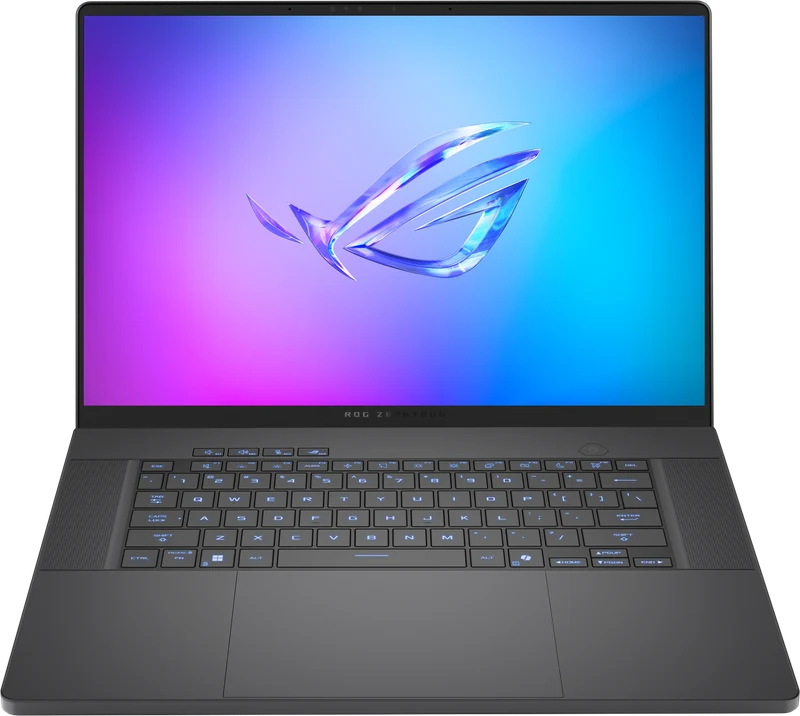
ASUS ROG Zephyrus G16 GU605CW — Portable RTX 5080 Alternative (Unranked)
The verified retail configuration pairs a Core Ultra 9 285H with a 120W RTX 5080, 32GB soldered LPDDR5X, 2TB storage, a 240Hz OLED display, and a 90Wh battery in a 1.85kg chassis.
It remains unranked because no matching controlled game dataset is available. Its portability and OLED specification are verified; value depends on the live retailer price.
- 1.85kg chassis with RTX 5080 graphics
- 90Wh battery
- OLED 240Hz — excellent for creative work
- 100% DCI-P3 factory calibrated
- 120W ceiling trails full-power 175W systems
- Soldered RAM — no upgrade path
- Retailer-upgraded configuration
MSI Raider 18 HX AI A2XWJG — Current RTX 5090 Retail Alternative (Unranked)
The current directly buyable Raider configuration uses a 175W RTX 5090, Core Ultra 9 285HX, 64GB upgradeable DDR5 and a 4K MiniLED 120Hz display. It replaces the older RTX 5080 retail entry previously described in this section.
This exact 64GB retail SKU remains unranked because the archived RTX 5080 benchmark set does not apply to it. Compare its live checkout price and matching evidence with the SCAR 18 before deciding.
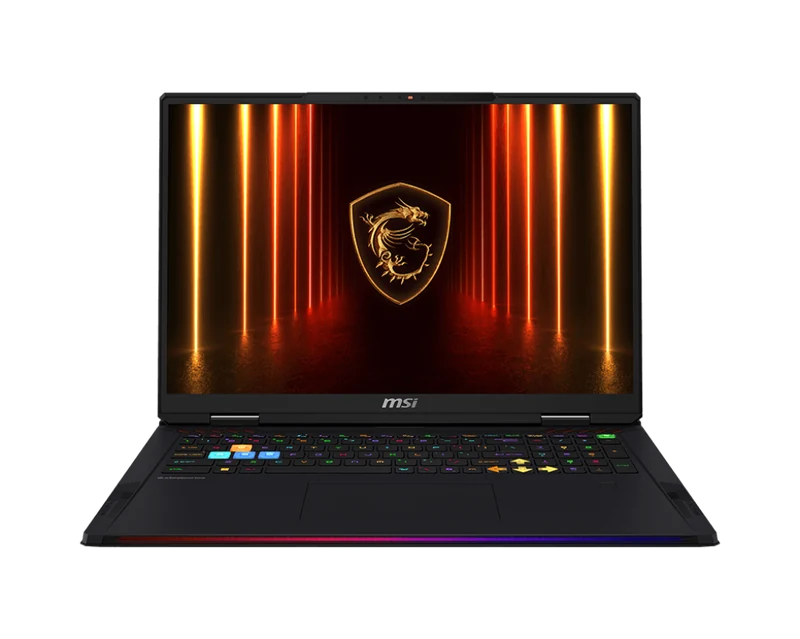
- RTX 5090 at up to 175W
- 64GB upgradeable DDR5 memory
- 18" 4K MiniLED display
- Upgradeable RAM and storage
- No matching controlled benchmark set
- 120Hz rather than 240Hz
- 3.6kg chassis
MSI Titan 18 HX AI — 4K Specification Alternative (Unranked)
The checked Titan configuration pairs a 175W RTX 5090 with a Core Ultra 9 285HX, 64GB DDR5-5600, 6TB storage, a 3840×2400 Mini-LED 120Hz display, Cherry MX keyboard, 99.9Wh battery, and 3.6kg chassis.
Those specifications make it a specialized desktop replacement, but this guide does not yet publish an exact benchmark dataset for the configuration. It remains unranked; compare its live price only after verifying the exact memory, storage, display, and seller.
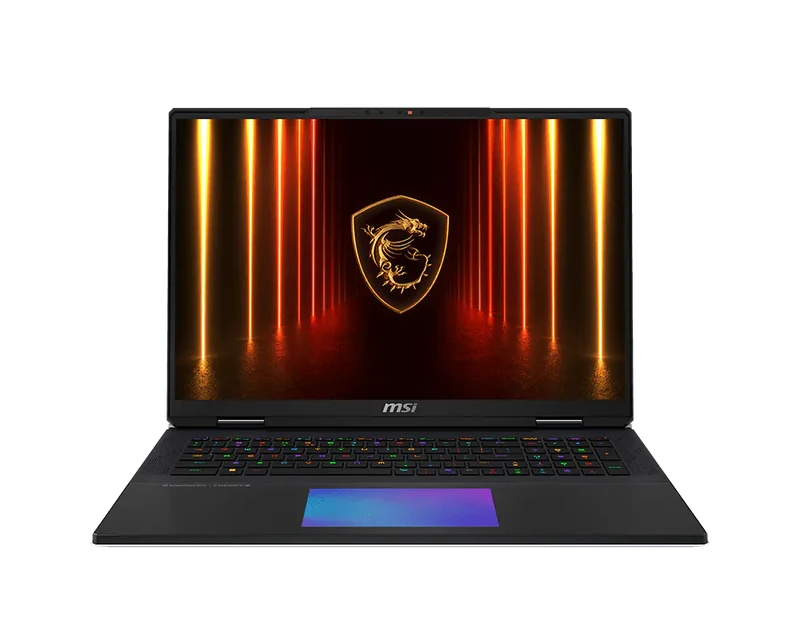
- Cherry MX mechanical keyboard
- 3840×2400 Mini-LED display
- RTX 5090 at 175W
- 64GB memory and 6TB storage configuration
- No exact benchmark dataset published here
- 120Hz — slower refresh than every rival
- 4K at 120Hz is the ceiling — can't do 4K/240Hz
Full Comparison
| Laptop | Price | GPU | TGP | Display | Benchmark evidence | Weight |
|---|---|---|---|---|---|---|
| MSI Raider 18 HX AI | Check live | RTX 5090 | 175W | 4K MiniLED 120Hz | Current retail specification review; unranked | 3.6kg |
| ASUS SCAR 16 | Check live | RTX 5080 | 175W | MiniLED 240Hz | Exact sourced dataset | 2.8kg |
| Razer Blade 16 EN9 | Check live | RTX 5090 | 165W | OLED 240Hz | Related 32GB family dataset | 2.14kg |
| Zephyrus G16 GU605CW | Check live | RTX 5080 | 120W | OLED 240Hz | Retail specification verified; unranked | 1.85kg |
| ASUS SCAR 18 | Check live | RTX 5090 | 175W | MiniLED 240Hz | Exact sourced dataset | 3.3kg |
| MSI Titan 18 HX AI | Check live | RTX 5090 | 175W | 4K Mini-LED 120Hz | Specifications only · unranked | 3.6kg |
SCAR 16 vs SCAR 18: Which One?
Choose between them by GPU tier, screen size, weight, and current price. Both use liquid metal cooling and MiniLED 240Hz displays, but the SCAR 18 carries an RTX 5090 while the SCAR 16 uses an RTX 5080. Compare matching benchmark rows rather than applying one universal performance percentage.