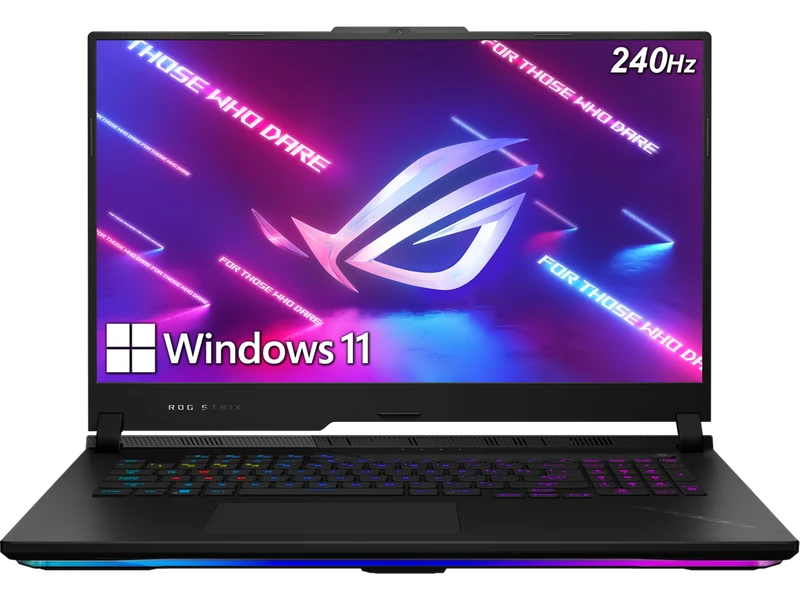
Overview — SCAR 18 Performance, 16-inch Size
The ASUS ROG Strix SCAR 16 pairs a maximum 175W RTX 5080 specification with ASUS's liquid-metal cooling design and MiniLED display technology in a smaller chassis than the SCAR 18. Its 2.8kg weight still places it firmly in the desktop-replacement class.
The 175W maximum power specification matches several competing RTX 5080 laptops, but sustained performance cannot be inferred from TGP alone. Cooling, firmware, CPU load, memory, and selected mode all affect the delivered result.
Compare the live checkout price with the Legion Pro 7i, Razer Blade 16, and other RTX 5080 systems. MiniLED versus OLED, portability, memory serviceability, and matching workload evidence are more useful decision factors than an unsupported universal performance or value claim.
Full Specifications
| GPU | NVIDIA GeForce RTX 5080 16GB GDDR7 — 175W TGP |
| CPU | Intel Core Ultra 9 275HX (24-core, up to 5.4GHz) |
| RAM | 32GB DDR5-5600 (2x16GB, upgradeable to 64GB) |
| Storage | 2TB PCIe Gen4 NVMe (2x M.2 slots) |
| Display | 16.0" MiniLED QHD (2560x1600) 240Hz, 1,100-nit HDR, 100% DCI-P3, 1,024 dimming zones |
| Battery | 90Wh (380W power adapter) |
| Weight | 2.8kg |
| Ports | Thunderbolt 4, USB-A x3, HDMI 2.1, SD card reader, 3.5mm combo, 2.5GbE LAN |
| Connectivity | Wi-Fi 7, Bluetooth 5.4 |
| Keyboard | Per-key RGB, N-key rollover, 1.7mm travel |
| OS | Windows 11 Home |
Display: MiniLED at 16 Inches
The 16-inch MiniLED QHD panel is one of the best gaming displays available at this size. 1,024 local dimming zones produce deep blacks and punchy HDR contrast. Peak brightness at 1,100 nits is exceptional — noticeably brighter than OLED panels in comparable machines during HDR content. Color coverage is 100% DCI-P3, Delta E below 1.5 out of the box.
The 240Hz refresh rate combined with the MiniLED's 3ms response time is excellent for both competitive and single-player gaming. The SCAR 18 has 2,048 dimming zones vs the SCAR 16's 1,024, which is perceptible in extreme HDR scenarios but invisible during normal gameplay. At 16 inches the panel's pixel density (188 PPI vs 166 on the 18-inch model) also gives text and UI elements a crisper appearance.
Gaming Performance and Benchmarks
The exact-configuration evidence below keeps native, DLSS Super Resolution, and Multi Frame Generation results separate. Maximum TGP and observed gaming power are labeled independently, and missing metrics remain N/A.
The verified rows show why rendering mode matters: native Ultra, RT Overdrive with MFG x2, and MFG x4 are different workloads and should not be presented as one generic "DLSS 4" result. Generated FPS can improve displayed smoothness, but it does not represent the same rendered performance or latency as native FPS.
Thermals and Cooling Evidence
ASUS documents liquid-metal thermal compound and a multi-fan cooling design for the SCAR 16 family. FRAMELIMIT has not completed a controlled thermal or acoustic test of this exact retail configuration, so no temperature, fan-noise, throttling, or sustained-power result is claimed as an in-house measurement.
Comparisons with the Razer Blade 16, Legion Pro 7i, or SCAR 18 require the same workload, power profile, firmware, ambient temperature, and measurement method. Chassis size or maximum TGP alone does not establish the cooler or faster sustained system.
Battery Life
The 90Wh battery establishes capacity, not runtime. Gaming and productivity endurance depend on GPU mode, brightness, refresh rate, network activity, workload, and the test endpoint. Compare matched published measurements before choosing it over a Zephyrus G16 or another portable alternative.
Build, Keyboard, and Ports
The SCAR 16 family uses a premium chassis with ASUS's Slash Lighting system. Keyboard feel, hinge behavior, flex, service access, and webcam quality require direct inspection of the delivered unit and are not scored here as FRAMELIMIT hands-on observations.
Use the exact ASUS specification and retailer listing to verify keyboard layout, memory and storage access, card reader, USB, display output, networking, and webcam configuration because regional variants can differ.
SCAR 16 vs SCAR 18 — Which to Buy?
This is the most common question for ASUS buyers at the flagship tier. The honest answer depends entirely on portability requirements:
Consider the SCAR 18 if you prioritize its RTX 5090 tier, larger panel, and higher documented local-dimming-zone count over portability. Confirm the premium with matched 4K ray-tracing evidence and the live checkout price.
Buy the SCAR 16 if you want the same cooling quality and thermal engineering in a machine you can actually transport. At 1440p — the native resolution of the panel — you will not feel the difference between RTX 5080 and RTX 5090 in 95% of games with DLSS 4 enabled.