What Matters for Video Editing — Gaming vs Dedicated Workstation
Video-editing performance depends on the application version, codec, media, effects, resolution, encoder path, memory, storage, drivers, power mode, and thermal state. Gaming specifications can make a laptop a credible candidate, but they do not prove export speed or timeline behaviour against a creator workstation.
Set VRAM, system-memory, storage, display, and CPU requirements from the projects you actually handle. For colour-critical work, require measured gamut, accuracy, brightness, HDR behaviour, calibration method, and output validation; an OLED or Mini-LED label alone is not sufficient.
Razer Blade 16: Family-Evidence Candidate
The exact EN9 retail configuration combines a 2560×1600 240Hz OLED, RTX 5090 at up to 165W, 64GB LPDDR5X memory, and a 2TB SSD. Independent evidence comes from a related 32GB RZ09-0581-family unit, so application-specific export speed and display accuracy remain unverified for the retail SKU.
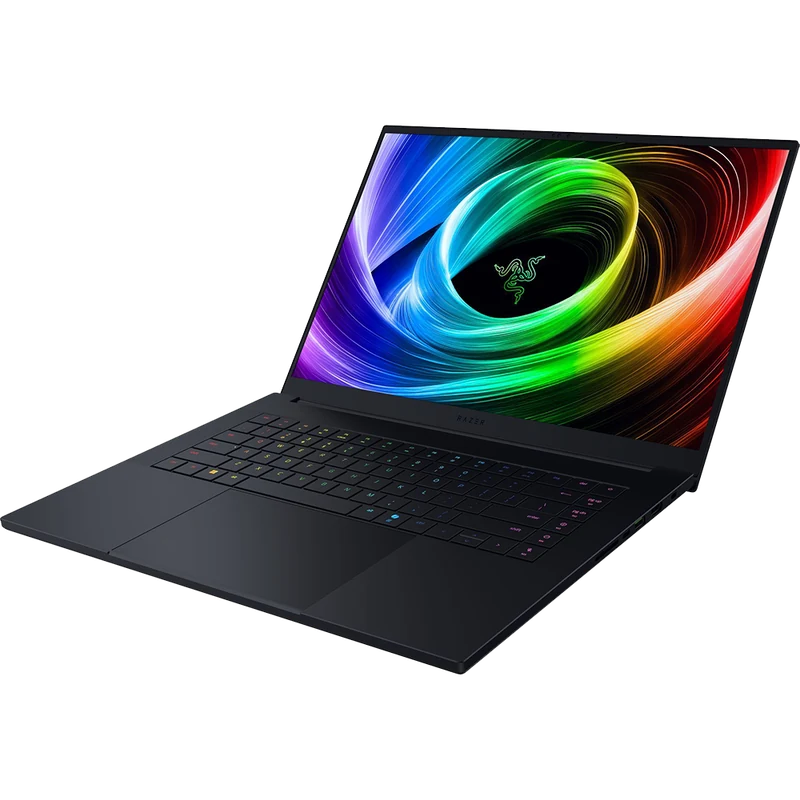
- RTX 5090 with 24GB VRAM
- 64GB retail memory configuration
- 2TB storage in the exact retail SKU
- 2.14kg official chassis weight
- Independent evidence uses a related 32GB family unit
- 165W GPU below larger 175W designs
- Memory is soldered
ASUS Zephyrus G14: Portable Candidate
For creators who move between locations, the directly buyable Zephyrus G14 GA403UP-CS96 combines a 2.8K OLED (2880×1800) at 120Hz, RTX 5070 8GB at up to 90W, Ryzen 9 270, and a 1.57kg listed chassis. The GU405AR RTX 5070 Ti game dataset does not apply, and no matching creator workflow is published.
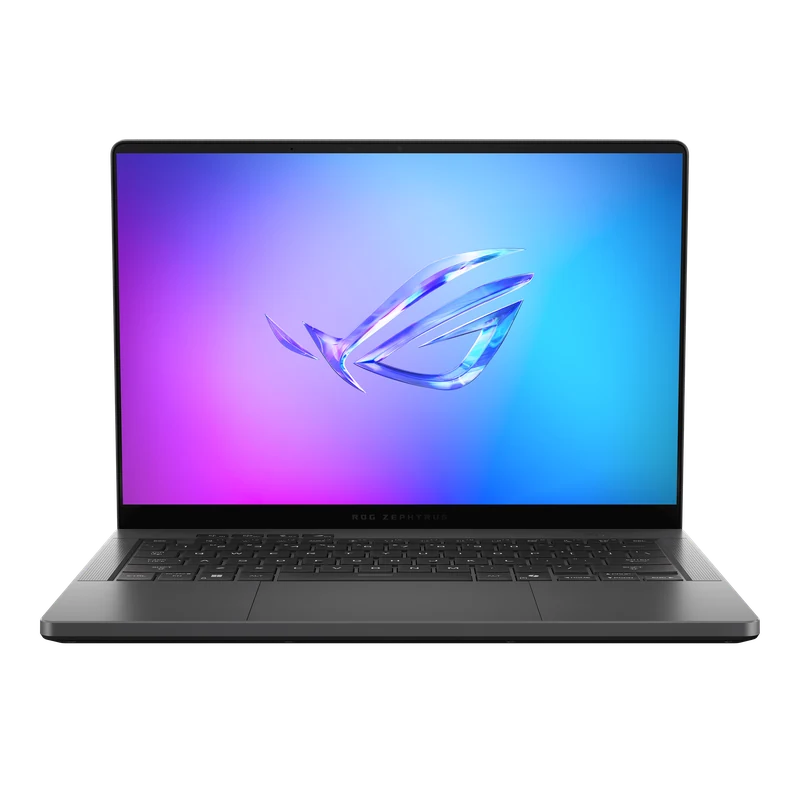
- 2.8K OLED in a compact chassis
- 1.57kg listed weight
- 32GB retail memory
- Direct exact-SKU offer
- 8GB VRAM can constrain heavy timelines
- RAM is soldered
- No matching export or calibrated-panel dataset
Lenovo Legion Pro 7i: High-Power Candidate
The exact 83F50053US pairs an RTX 5080 at up to 175W with 16GB GDDR7 and upgradeable system memory. It is a high-power candidate, but this guide does not estimate a Premiere Pro or DaVinci Resolve export advantage without a matching application test.
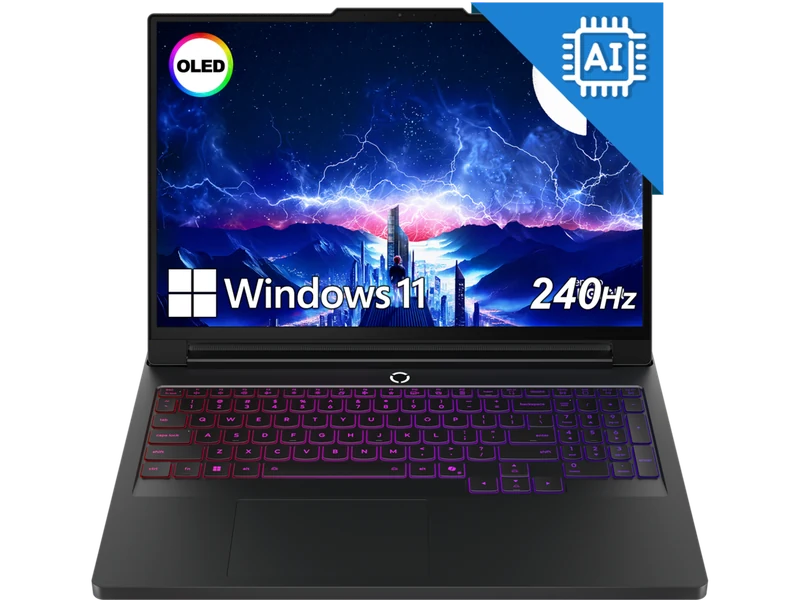
- RTX 5080 at up to 175W
- 16GB VRAM
- 32GB upgradeable DDR5
- Exact 83F50053US general benchmark evidence
- No matching export or timeline test here
- 2.71kg before charger and accessories
MSI Titan 18 HX AI: Specifications-Only Candidate
The Titan 18 HX AI specification combines an 18-inch 3840×2400 Mini-LED display, RTX 5090 with 24GB GDDR7, and 64GB DDR5. Those fields make it relevant to a creator shortlist, but this guide has no exact comparable export, timeline, display-calibration, thermal, or battery dataset for the configuration.
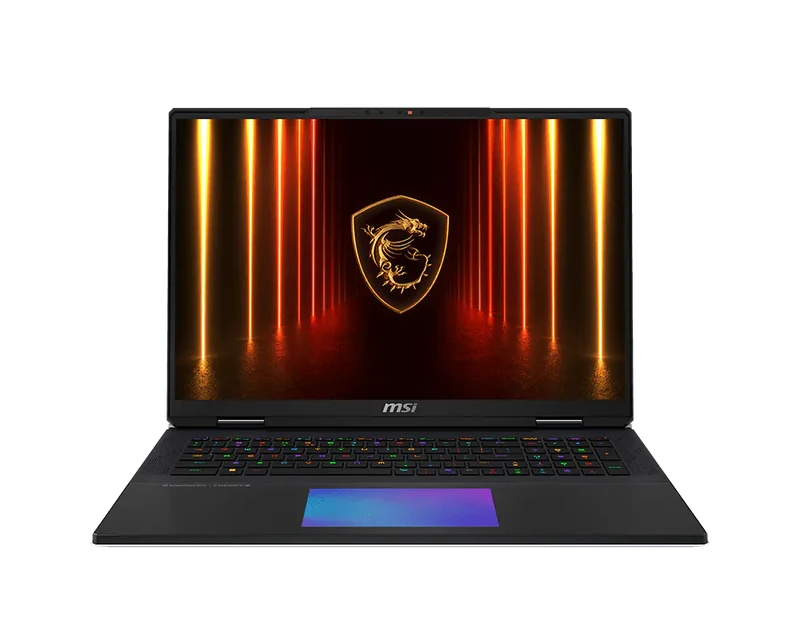
- 3840×2400 Mini-LED specification
- RTX 5090 with 24GB VRAM
- 64GB DDR5 specification
- Large 18-inch workspace
- No matching creator benchmark dataset
- Large 3.3kg-class chassis
- Live price and exact seller require verification
Creator-Workflow Evidence Status
| Laptop | GPU | General benchmark evidence | Comparable 4K export test |
|---|---|---|---|
| MSI Titan 18 HX AI | RTX 5090 175W | Specifications only | Not published under a matching workflow |
| Lenovo Legion Pro 7i | RTX 5080 175W | Exact gaming/synthetic dataset | Not published under a matching workflow |
| Razer Blade 16 | RTX 5090 165W max | Exact gaming/synthetic dataset | Not published under a matching workflow |
| Zephyrus G14 GA403UP-CS96 | RTX 5070 90W max | Specifications-only for this retail SKU | Not published under a matching workflow |
A valid export comparison requires the same project, media, effects, application version, encoder, power mode, and thermal state. Missing creator tests are not estimated.
Do You Actually Need OLED for Video Editing?
Panel technology alone does not determine suitability for editing. Compare measured gamut, accuracy, brightness, contrast, uniformity, HDR behaviour, calibration controls, surface finish, and output pipeline for the exact panel. Colour-critical or HDR delivery may still require a calibrated external reference display and a validated colour-managed workflow.