What You're Actually Paying For Above $3,000
Everything in this guide runs either an RTX 5080 or RTX 5090 at full TGP — 150W minimum, most at 175W. At that power level, GPU performance differences between models are small. What separates a $3,500 laptop from a $5,000 one isn't raw frames — it's thermal engineering, display quality, build materials, and longevity under sustained load.
The ASUS SCAR line uses liquid metal compound on both CPU and GPU dies — a significant thermal advantage that keeps chips cooler and clocked higher over 30+ minute sessions than any competing chassis. Razer's CNC aluminum monocoque is the best-built laptop we've handled. MSI's Titan is the only gaming laptop with a genuine mechanical keyboard. These are the real differentiators at this price.
1. ASUS ROG Strix SCAR 18 — Best Overall Flagship
The SCAR 18 is the benchmark machine — literally. Every other laptop in this guide is measured against it. The RTX 5090 at 175W combined with ASUS's end-to-end vapor chamber and liquid metal compound on both the CPU and GPU delivers the highest sustained gaming performance of any laptop we've tested. In 30-minute load tests, it maintains GPU clocks that rival machines lose after 10–15 minutes as thermals creep up.
The 18-inch MiniLED display is exceptional: 2,048 local dimming zones, 1,100-nit HDR peak, 2560×1600 at 240Hz. For a desktop-replacement machine that lives on a desk, this is the best gaming display available in a laptop. The compromise is everything else: 3.1kg, 2-hour gaming battery, loud fans under load, and a 400W power brick that goes everywhere with it.
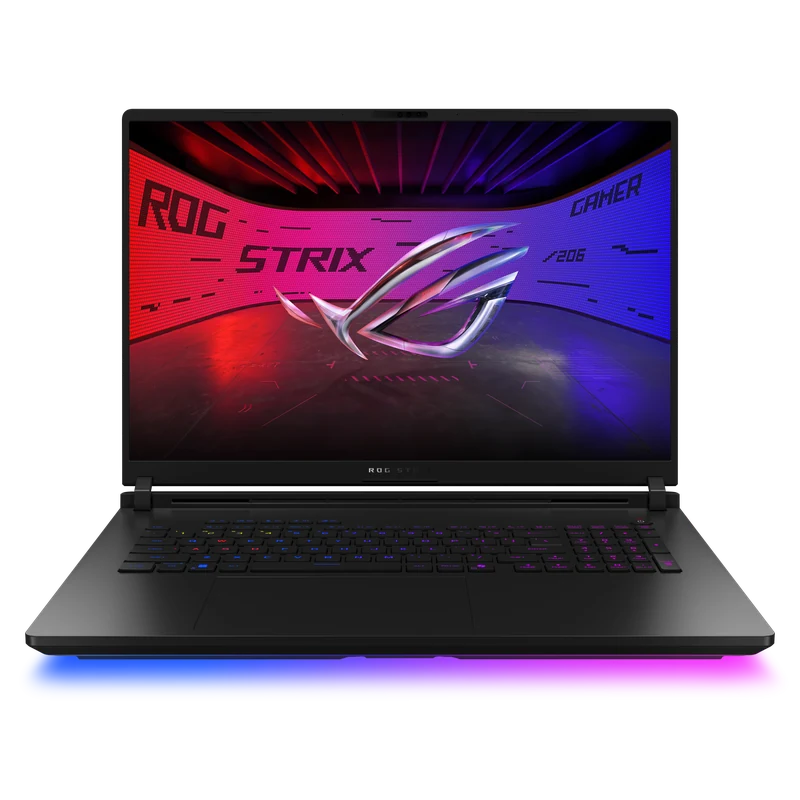
- Highest sustained gaming performance tested
- Liquid metal on CPU + GPU — best thermals available
- 2,048-zone MiniLED — 1,100 nits HDR peak
- RTX 5090 at full 175W — no compromise
- Tool-less RAM and SSD access
- 3.1kg — desk machine only
- ~2 hrs gaming battery
- Loud fans at full load
- 400W power brick is large
2. ASUS ROG Strix SCAR 16 — Best RTX 5080 Flagship
The SCAR 16 is the answer to a specific question: what if you want everything the SCAR 18 delivers, but in a body you can occasionally carry? At 2.3kg — 800g lighter than the SCAR 18 — it's still not a portable machine, but it's feasible in a backpack for short trips. The RTX 5080 at full 175W TGP with identical liquid metal cooling means GPU thermals are essentially the same as the SCAR 18. The performance gap is purely the GPU tier: RTX 5090 vs RTX 5080, roughly 20–25% at the same TGP.
The MiniLED display steps down slightly to 1,024 local dimming zones (vs 2,048 on the 18") but at 16 inches it's still the best display in any 16" laptop. The same tool-less RAM and SSD access applies. At $3,799 — $700 less than the SCAR 18 — it's the pick if you want ASUS's thermal engineering without committing to an 18" chassis.
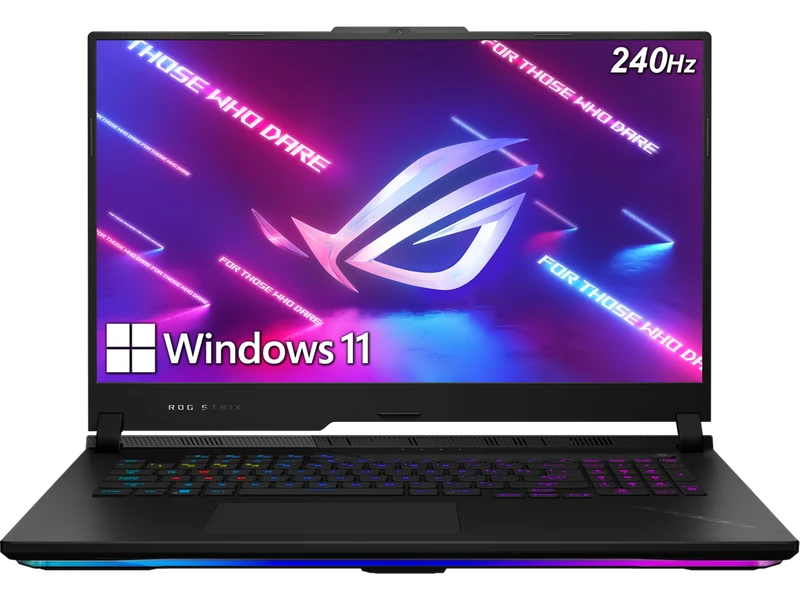
- Same liquid metal cooling as SCAR 18
- RTX 5080 at 175W — top of its class
- 1,024-zone MiniLED — best 16" display tested
- 800g lighter than SCAR 18
- $700 less than SCAR 18 for ~20% less GPU perf
- Still 2.3kg — not a casual carry
- ~3 hrs gaming battery
- RTX 5080 shows its limits at native 4K
3. Razer Blade 16 — Best Portable Flagship
The Razer Blade 16 makes a different argument to everyone else in this guide: that a flagship gaming laptop should be something you can take with you. At 2.16kg and 16.4mm thin, it's the thinnest 16" RTX 5080 laptop in production. The CNC-machined aluminum unibody chassis is the best-built laptop in this guide by feel — nothing else is as rigid or as premium to the touch.
The RTX 5080 runs at 150W (vs 175W in the SCAR 16) — a deliberate trade-off for the thinner chassis and better battery. In benchmarks that translates to roughly 10% lower performance than the SCAR 16 under sustained load. The OLED display is a different story from the SCAR's MiniLED — better for dark single-player games (infinite contrast, true blacks), slightly less impressive for HDR brightness peaks. At $3,799 — the same price as the SCAR 16 — it's a genuine choice between priorities, not tiers.
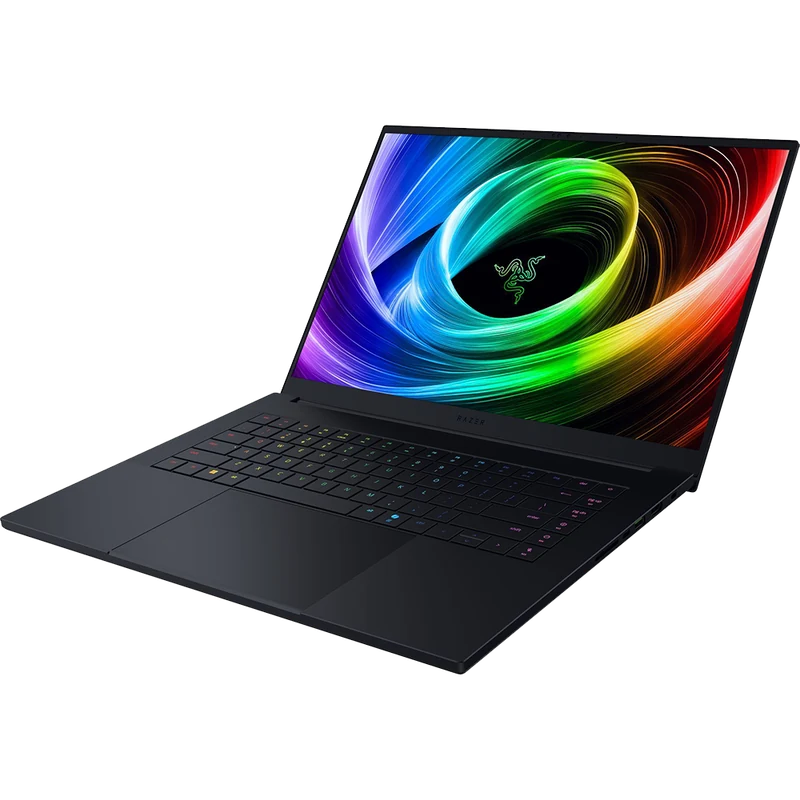
- Thinnest 16" RTX 5080 at 16.4mm
- Best chassis build quality of any gaming laptop
- OLED — best contrast and colour accuracy
- 5+ hr battery — usable away from desk
- Whisper-quiet in day-to-day use
- 150W TGP — ~10% slower than SCAR 16 at 175W
- RAM soldered — no upgrade path
- Razer warranty support historically inconsistent
- Same price as SCAR 16 with less raw performance
4. ASUS ROG Zephyrus G16 — Best for Creators
The G16 targets a different buyer than the SCAR or Blade. At 1.85kg with a 5–7 hour battery, it's the only machine in this guide that's genuinely portable. The RTX 5080 runs at 120–140W — lower than the SCAR 16 but still among the highest TGPs in a sub-2kg chassis. The OLED display at 240Hz is the same class of panel as the Blade 16, with 100% DCI-P3 accuracy that makes it legitimately useful for photo and video work.
The trade-off is RAM: it's soldered, so whatever you configure at purchase is what you have. Make sure to spec 32GB at minimum. At $3,939 it's the most expensive machine at this GPU tier — you're paying for the combination of portability, display, and ASUS's build quality. If that combination fits your workflow, nothing else delivers it.
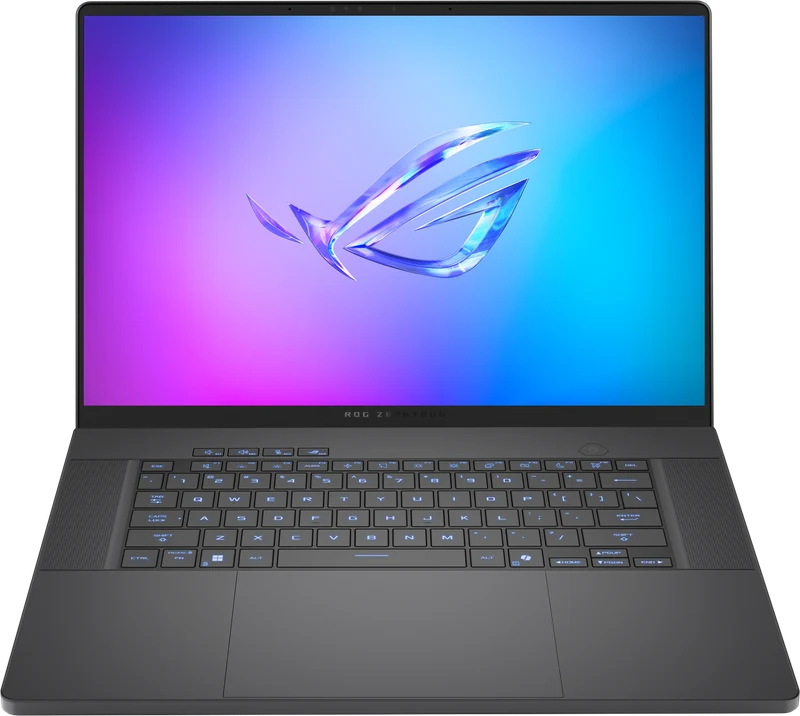
- 1.85kg — only truly portable flagship
- 5–7 hr battery — class-leading at this GPU tier
- OLED 240Hz — excellent for creative work
- 100% DCI-P3 factory calibrated
- 120W TGP — noticeably slower than SCAR 16 or Blade 16
- Soldered RAM — no upgrade path
- Most expensive RTX 5080 option at $3,939
5. MSI Raider 18 HX AI — Cheapest RTX 5090
The MSI Raider 18 is the entry point into RTX 5090 territory at $3,543 — $956 less than the SCAR 18 for the same GPU tier. The RTX 5090 runs at 175W, matching the SCAR 18's TGP, but MSI's thermal solution runs the GPU roughly 5–8°C hotter under sustained load. That translates to slightly lower sustained clocks in extended sessions compared to ASUS's liquid-metal solution.
The 18-inch QHD+ 240Hz IPS display is good but not exceptional — no MiniLED, no OLED. The chassis is solid without being remarkable. If your goal is RTX 5090 performance at the lowest possible price, the Raider 18 delivers it. If display quality or sustained thermal performance matters, the extra money for the SCAR 18 is justified.
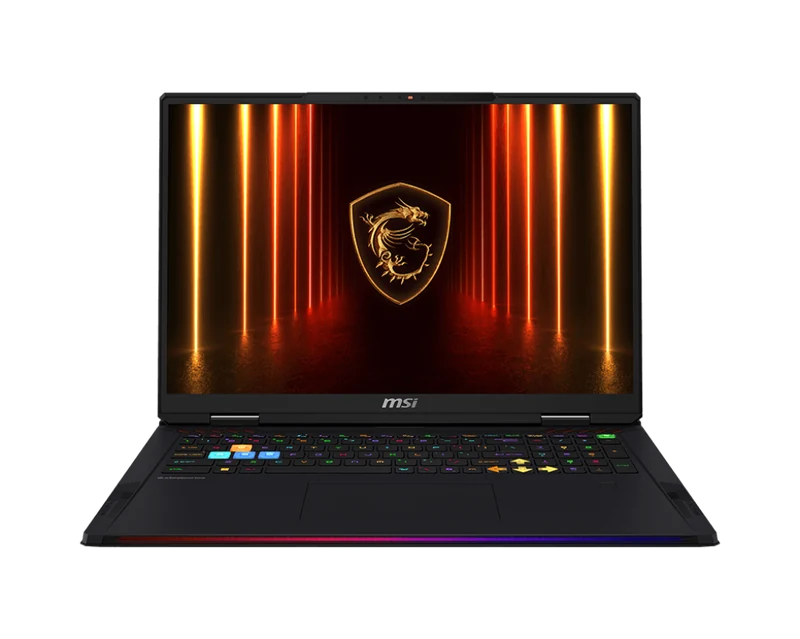
- RTX 5090 at 175W — $956 less than SCAR 18
- Strong sustained performance
- 18" display — immersive for desk gaming
- Upgradeable RAM and storage
- Runs 5–8°C hotter than SCAR 18 under load
- IPS display — no MiniLED or OLED
- 3.1kg — same weight as SCAR 18
6. MSI Titan 18 HX AI — The Desk Monarch
The Titan 18 is a category of one. At $4,999 it's the most expensive laptop in this guide, but it earns the premium with features no other gaming laptop offers: a genuine mechanical keyboard (Cherry MX switches, same as you'd find in a dedicated gaming keyboard), a 4K mini-LED display at 120Hz, and an 18-inch chassis that somehow weighs less than the SCAR 18 at 3.0kg. The RTX 5090 runs at 175W.
The 4K display is the decisive differentiator — every other flagship in this guide tops out at QHD+ (2560×1600). At 4K with DLSS 4 Quality scaling, the image quality is genuinely different from anything else. If you game at 4K natively or use this for 4K video work, nothing else comes close. If you game at 1440p, you're paying a significant premium for a display resolution your workflow doesn't fully exploit.
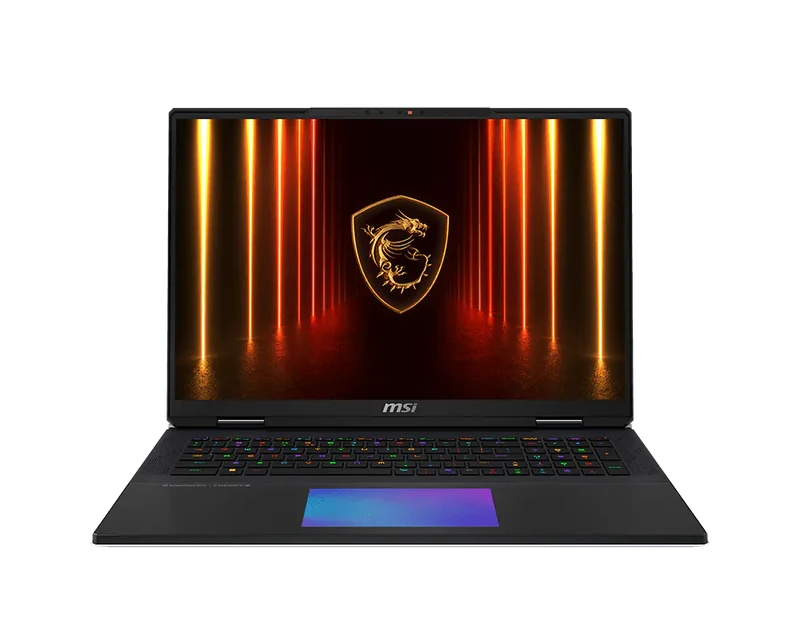
- Only gaming laptop with Cherry MX mechanical keyboard
- Only 4K display at this GPU tier
- RTX 5090 at 175W
- Lighter than SCAR 18 at 3.0kg
- $500 more than SCAR 18 for similar GPU performance
- 120Hz — slower refresh than every rival
- 4K at 120Hz is the ceiling — can't do 4K/240Hz
Full Comparison
| Laptop | Price | GPU | TGP | Display | Avg FPS 1440p | Weight |
|---|---|---|---|---|---|---|
| MSI Raider 18 HX AI | $3,543 | RTX 5090 | 175W | QHD+ 240Hz IPS | 148 fps | 3.1kg |
| ASUS SCAR 16 | $3,799 | RTX 5080 | 175W | MiniLED 240Hz | 132 fps | 2.3kg |
| Razer Blade 16 | $3,799 | RTX 5080 | 150W | OLED 240Hz | 121 fps | 2.16kg |
| Zephyrus G16 | $3,939 | RTX 5080 | 120W | OLED 240Hz | 108 fps | 1.85kg |
| ASUS SCAR 18 | $4,499 | RTX 5090 | 175W | MiniLED 240Hz | 156 fps | 3.1kg |
| MSI Titan 18 HX AI | $4,999 | RTX 5090 | 175W | 4K mini-LED 120Hz | 142 fps | 3.0kg |
SCAR 16 vs SCAR 18: Which One?
This is the most common question we get at this tier. The short answer: buy the SCAR 16 unless you specifically need the RTX 5090 or the larger screen. The SCAR 16 runs the same liquid metal cooling, the same chassis quality, and the same display technology in a chassis that's 800g lighter and $700 cheaper. The RTX 5090 in the SCAR 18 delivers about 20% more GPU performance — meaningful at 4K native, barely visible at 1440p with DLSS 4 Quality enabled. For 1440p gaming, the SCAR 16 is the better value.