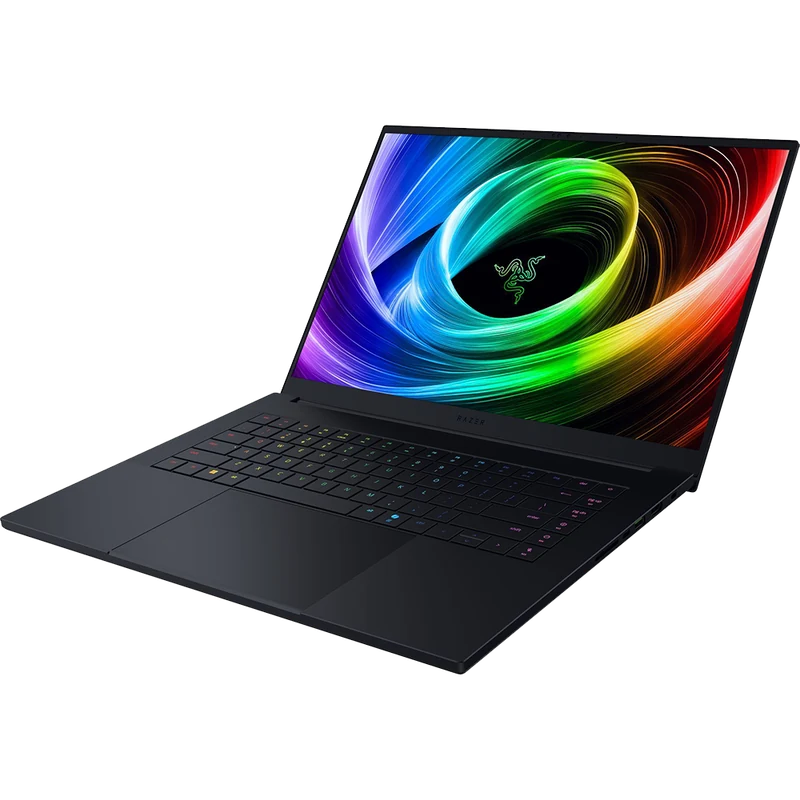
Full Specifications
| GPU | RTX 5080 16GB GDDR7 · 150W TGP |
| CPU | Intel Core Ultra 9 285H · up to 5.4GHz |
| RAM | 32GB LPDDR5X · soldered |
| Storage | 2TB PCIe Gen4 NVMe |
| Display | 16" 2560×1600 OLED 240Hz · 1000 nits · HDR True Black 600 |
| Weight | 2.1kg |
| Battery | 95.2Wh |
| Price | $3,799 MSRP |
Score Breakdown
Gaming Performance — 1440p Benchmarks
At 150W TGP the Blade 16 sits between the 120W thin laptops and the 175W desktop replacements. In practice it's 10–12% behind the Legion Pro 7i in sustained workloads but the gap narrows with DLSS 4 enabled. For the games most Blade 16 owners play — anything at medium-to-high settings — it never feels constrained.
| Game | Settings | Avg FPS | 1% Low |
|---|---|---|---|
| Cyberpunk 2077 | Ultra + DLSS 4 Quality | 118 | 94 |
| Black Myth: Wukong | Epic + DLSS 4 Quality | 61 | 48 |
| Alan Wake 2 | Ultra + DLSS 4 Quality | 84 | 68 |
| Forza Horizon 5 | Extreme | 165 | 142 |
| CS2 | High | 240+ | 198 |
| Elden Ring | Max | 108 | 91 |
1440p · DLSS 4 Quality where supported · Performance mode · Apr 2026
The Display — Best We've Tested
The 2560×1600 OLED at 240Hz earns the highest display score of any laptop in our test suite. True blacks, 1000 nits peak brightness, 100% DCI-P3 with factory calibration, HDR True Black 600. Gaming on this panel is a genuinely different experience — explosions, UI elements, and dark scenes all look better than on any IPS panel at any price. Response time is 0.2ms.
The 240Hz rate is the differentiator over the Zephyrus G14's 120Hz OLED — for competitive gaming and fast-paced titles, the higher refresh is noticeable. If you want the best gaming display on a laptop full stop, this is it.
Thermals — The Trade-off
The slim aluminium chassis constrains cooling. Razer runs the RTX 5080 at 150W to stay within thermal limits — GPU peaked at 91°C under sustained load, CPU at 88°C. Both are within spec but warmer than 175W machines with larger cooling solutions. Fan noise at maximum is 51dB. In Balanced mode for everyday use it's near-silent. The thermal performance is the only real weakness of an otherwise exceptional machine.
Build Quality
CNC-machined aluminium, sub-millimetre tolerances, zero flex anywhere on the chassis. The Blade 16 feels more like a MacBook Pro than a gaming laptop — and that's exactly the point. Per-key Razer Chroma RGB keyboard with 1.5mm travel. Ports: 2× Thunderbolt 5, 1× USB-A 3.2, 1× HDMI 2.1, SD card reader, 3.5mm jack. The Thunderbolt 5 is a genuine differentiator — eGPU and high-bandwidth peripherals at full speed.
Battery Life
The 95.2Wh battery delivers 5.5–6.5 hours of productivity on battery. Gaming drains it in about 75 minutes. Better than most flagships at this GPU tier, but the Intel platform can't match AMD-equipped rivals on efficiency. The 230W power brick is large.
- Best display of any gaming laptop — OLED 240Hz 1000 nits
- Best build quality of any gaming laptop — CNC aluminium
- Thunderbolt 5 — future-proof connectivity
- 2TB storage standard
- 2.1kg — light for an RTX 5080 machine
- 150W TGP — 10–15% slower than 175W rivals
- RAM soldered — 32GB ceiling, no upgrade path
- $3,799 — $600 more than Legion Pro 7i
- Runs warm under sustained load