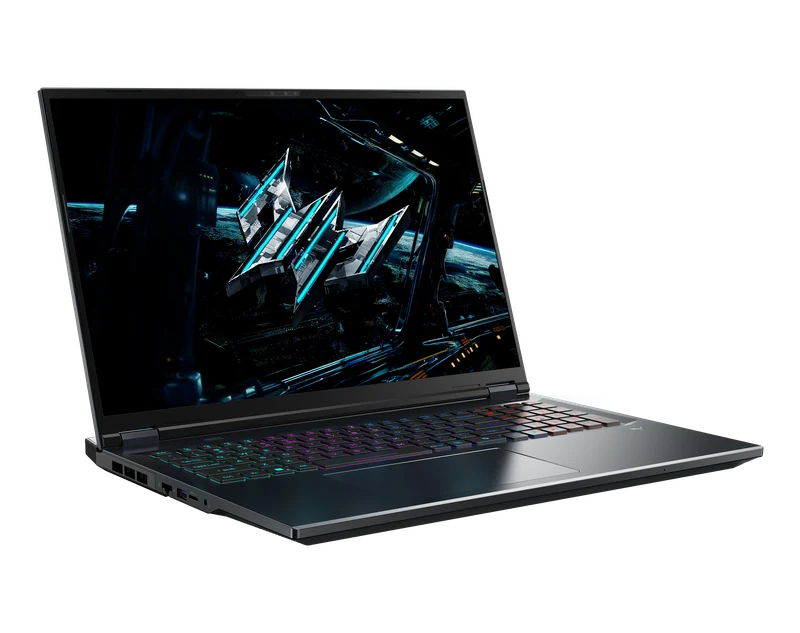
Full Specifications
| GPU | RTX 5070 12GB GDDR7 · 130W TGP |
| CPU | Intel Core Ultra 7 265HX · 24 cores · up to 5.3GHz |
| RAM | 32GB DDR5-5600 · upgradeable |
| Storage | 1TB PCIe Gen4 NVMe |
| Display | 16" 2560×1600 IPS 165Hz · 400 nits |
| Weight | 2.6kg |
| Battery | 76Wh |
| Price | ~$1,919 MSRP |
Score Breakdown
Gaming Performance — 1440p Benchmarks
At 130W TGP the Helios Neo runs the RTX 5070 at slightly lower power than the Legion 5i's 140W, translating to roughly 8% lower average fps in sustained workloads. The gap shrinks with DLSS 4 enabled. For 1440p gaming at high settings, the Helios Neo delivers consistently smooth frame rates in every current title.
| Game | Settings | Avg FPS | 1% Low |
|---|---|---|---|
| Cyberpunk 2077 | High + DLSS 4 Quality | 104 | 82 |
| Black Myth: Wukong | High + DLSS 4 Quality | 62 | 49 |
| Alan Wake 2 | High + DLSS 4 Quality | 81 | 65 |
| Forza Horizon 5 | High | 152 | 131 |
| CS2 | High | 165+ | 144 |
| Elden Ring | Max | 98 | 82 |
1440p · DLSS 4 Quality where supported · Performance mode · Apr 2026
Thermals — FrostBlade Does Its Job
Acer's FrostBlade thermal system — a vapor chamber combined with four heat pipes and dual fans — keeps the RTX 5070 at 80°C peak. That's 4°C cooler than the Legion 5i and meaningfully better sustained performance in long sessions. CPU stays at 79°C. Fan noise maxes at 45dB — one of the quieter gaming laptops at full load. The thermal engineering is genuinely impressive for the price.
Display & Build
The 16-inch 2560×1600 IPS at 165Hz is good — 402 nits measured, 94% DCI-P3. Accurate colours and enough brightness for indoor use. The chassis is plastic-and-aluminium, solid but not premium feeling. Ports are strong: 2× USB-A 3.2, 1× USB-C (Thunderbolt 4), 1× HDMI 2.1, SD card reader, Ethernet. Upgradeable RAM and two M.2 slots. At 2.6kg it's mid-weight — portable in a bag but not a thin machine.
- Best thermals of any RTX 5070 laptop at this price
- 32GB DDR5 + 1440p display standard at ~$1,919
- Quieter than competitors at full load (45dB)
- SD card reader + Thunderbolt 4
- Upgradeable RAM and dual NVMe
- 130W TGP — 8% slower than Legion 5i in sustained loads
- Plastic chassis — not as refined as Lenovo or ASUS
- 76Wh battery — shorter than competitors
- Brand recognition lags Lenovo and ASUS in gaming